Family patterns in India have changed a lot over the past two decades. Earlier, it was common to see large joint families living under one roof. But today, the number of nuclear families, single professionals, and senior citizens living independently has increased. With these shifts, the demand for housing has also changed. So, the question arises: are New Flats in Chennai being planned and built with these new family structures in mind? Let us take a closer look at this topic.
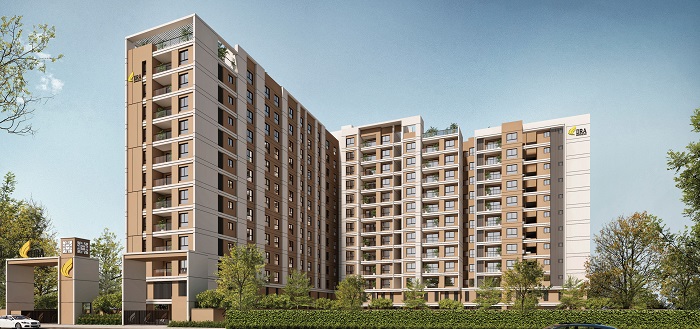
Changing Family Dynamics in India
Traditionally, Indian families followed a joint system where multiple generations lived together. In such households, the need for larger spaces with several rooms was evident. However, modern life has reshaped this structure. Many young professionals prefer nuclear setups, often just a couple with one child. At the same time, there is a growing number of senior citizens who choose independent living.
This shift has pushed developers to rethink how apartments are designed. Instead of focusing only on bigger units, they now offer multiple options to meet different family needs.
Layouts for Nuclear Families
One of the most prominent groups looking for New Flats in Chennai today are nuclear families. These buyers usually prefer two-bedroom flats that balance affordability with comfort. Developers provide layouts with compact living areas, modular kitchens, and functional balconies. The emphasis is on practical space usage rather than large unused rooms.
For example, instead of large dining halls, many flats now feature integrated living and dining spaces. This caters directly to the needs of smaller households where maintaining vast areas is unnecessary.
Options for Single Professionals
The rise of IT and corporate sectors in Chennai has brought in a large population of single professionals. Their requirements differ from nuclear families. They often prefer one-bedroom flats or studio apartments that are affordable, easy to maintain, and located close to workplaces.
Builders have recognized this trend and many housing projects now include smaller units. These are compact but provide all the necessary facilities like efficient kitchens, storage solutions, and access to shared amenities such as gyms and coworking spaces.
Accommodation for Senior Citizens
A growing focus is also on senior citizens who live independently after retirement. New Flats in Chennai are increasingly considering features that make life easier for them. Flats with lifts, wide doorways, slip-resistant tiles, and community health facilities are being introduced in several projects.
In addition to the physical design, many builders are also developing retirement communities where residents can live in a secure environment while still maintaining their independence.
Larger Flats for Extended Families
Although nuclear families dominate today’s housing market, the demand for larger flats has not disappeared. Many buyers still prefer three or four-bedroom flats where parents, children, and grandparents can live together. Developers continue to provide such units, but they are fewer compared to two-bedroom flats.
In most projects, a mix of unit sizes is offered to appeal to a wider range of buyers. This variety makes it possible for extended families to find suitable options without having to shift to independent houses.
Importance of Community Spaces
Apart from flat sizes, community spaces have become an important consideration in new housing projects. Families today look for facilities where children can play safely, adults can exercise, and seniors can socialize. Developers are responding by adding landscaped gardens, walking tracks, multipurpose halls, and play areas.
This shows that New Flats in Chennai are not just about private living spaces but also about shared amenities that support different lifestyles.
Adapting to Work-from-Home Needs
Another major shift seen in recent years is the work-from-home trend. Many professionals now spend a significant part of their day at home. This has led to a demand for small office spaces within flats.
In response, some new projects now include study nooks or flexible layouts that allow one room to be used as a home office. This design choice reflects the growing influence of modern work culture on family living.
The Role of Location
The design of flats is also closely linked with location. Areas near IT corridors such as OMR and Porur see a higher demand for compact units suited for professionals. On the other hand, traditional residential areas like Anna Nagar or T. Nagar often see families opting for larger flats.
Therefore, New Flats in Chennai vary not only in design but also in location-based planning. Builders try to match the profile of buyers in each neighborhood with the type of flats they develop.
Challenges in Meeting All Family Needs
While developers have made changes to accommodate different family structures, challenges still exist. Some buyers feel that compact flats compromise too much on storage. Larger families sometimes find that the number of big units available in new projects is limited. Senior citizens may still struggle with projects that prioritize luxury amenities over accessibility.
Balancing all these demands in a single project remains difficult. Yet, by offering a range of options within the same development, builders are trying to bridge the gap.
Conclusion
The design of New Flats in Chennai shows clear signs of adapting to India’s changing family structures. Whether it is compact flats for nuclear families, one-bedroom units for professionals, or senior-friendly layouts for retirees, there is an attempt to address diverse needs. While challenges remain in satisfying every group fully, the variety of options today is far greater than it was two decades ago.
As families continue to change, housing designs will also continue to shift. Buyers now have more choices that match their lifestyle, and developers are responding to this demand with practical, flexible solutions.
 Cash Flows